
GoFundMe’s Unauthorized Nonprofit Pages: What Happened and How to Protect Your Organization
Nonprofits were stunned to find GoFundMe nonprofit pages created without consent. Here’s what it happened —and why it’s important to own your mission, your data, and your donor relationships.

Recently, nonprofits across the U.S. were shocked to learn that GoFundMe had created more than 1.4 million fundraising pages on their behalf — without their awareness or approval.
These GoFundMe nonprofit pages used public data, such as EINs and IRS records, to generate donation pages for nonprofits that never signed up. To make matters worse, pages automatically added default tips that went toward GoFundMe itself. Unless donors manually lowered or removed the extra tip, part of their donation could go to the platform instead of the intended nonprofit.
The result? Confusion, frustration, and concern from organizations and donors alike. Nonprofits, professionals, and industry leaders were quick to condemn the unsanctioned pages.
Even though GoFundMe has apologized and made changes to its nonprofit page policies, this situation is an important reminder of why nonprofits should own their data, messaging, and fundraising strategy — rather than relying on third-party GoFundMe nonprofit pages they don’t control.
How it happened
GoFundMe reportedly scraped publicly available nonprofit data — including IRS records, EINs, and other public data — to automatically create GoFundMe nonprofit fundraising pages.
While this data is meant to promote transparency and trust, GoFundMe used it in a way that raised serious ethical questions. These pages asked for donations under nonprofit names, without the nonprofits’ consent, and sometimes displayed outdated branding, old logos, or confusing messaging.
Even worse, they’d added extra fees, including a default tip (up to 16.5%) and a 5% surcharge on recurring gifts — on GoFundMe nonprofit pages that organizations didn’t authorize.
For many nonprofits, that created a mess online — especially when the GoFundMe nonprofit pages appeared higher in search results than the organization’s own website.
Why it’s a problem
When a third-party platform speaks for your cause without permission, a lot can go wrong — not just online, but in your relationships with donors and supporters. Here’s why this kind of overreach is such a serious issue:
Erodes donor trust
Trust is everything in fundraising. When donors discover donation pages they didn’t know were unauthorized, they start questioning what’s real and what’s not. If they feel misled — even unintentionally — they may hesitate to give again, not only on GoFundMe but through your official channels, too.
Creates confusion
Donors may believe they’re supporting your organization directly when, in fact, the gift is being processed through a third-party system you didn’t set up or approve. This confusion can lead to duplicate donations, lost receipts, and questions about where the money actually goes — especially if donors find multiple GoFundMe nonprofit pages for the same cause.
Damages your SEO strategy and website traffic
Many nonprofits spend months building search and marketing strategies to drive donations to official campaigns. When a large platform like GoFundMe automatically creates pages, those pages can show up higher in Google results, taking traffic away from your official donation forms. That means your carefully planned campaigns might reach fewer people.
Dilutes your branding and messaging
Branding isn’t just about logos and colors — it’s about your story and values. If a GoFundMe nonprofit page uses an old logo, incorrect images, or language that doesn’t reflect your voice, it can misrepresent your organization. Donors might assume you don’t pay attention to your own materials, or worse, think the page’s messaging represents you.
Blocks donor relationships
When you don’t control the donation platform, you lose access to donor data — names, emails, and gift amounts. That means you can’t thank supporters, add them to your newsletter, or build an ongoing relationship. Over time, that limits your ability to grow your donor base and sustain your mission.
GoFundMe’s response
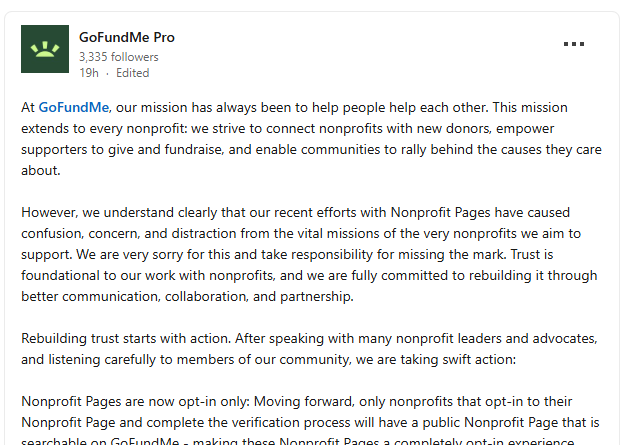
After days of public outcry, GoFundMe issued an apology for the overreach and announced key changes to its nonprofit pages system:
- Nonprofit pages are now opt-in only
- Unclaimed GoFundMe nonprofit pages will be removed and de-indexed from search engines
- The nonprofit directory (a list of verified nonprofits) will remain available
However, some nonprofits that claimed their pages early to control the damage are now unsure how to fully remove them. GoFundMe has also not addressed what happens to the revenue generated from any tips made toward the platform as part of the unauthorized fundraising.
What you can do
While GoFundMe has announced it will remove and de-index any unclaimed pages, it’s important to verify your own organization’s presence. Here’s how you can look up or remove your GoFundMe nonprofit page.
Look up your organization.
Visit GoFundMe’s nonprofit search page and search by your organization’s legal name or EIN.
Claim or remove your page.
Read GoFundMe’s terms carefully before claiming your page here. You can remove your page by emailing privacy-requests@gofundme.com and dpo@gofundme.com — or by contacting GoFundMe Support. Request the removal of the page on the basis of “unauthorized charitable solicitation” and “trademark infringement”.
Owning your fundraising — why it matters
While GoFundMe has adjusted its approach, this incident is a reminder that control over your fundraising is critical.
Your donors trust you — not a third-party platform — to handle their gifts responsibly.
When you own your data, branding, and donor relationships, you can:
- Protect your supporters’ personal information.
- Build lasting donor relationships with personalized follow-ups.
- Keep your branding consistent across every campaign.
- Ensure your fundraising strategy aligns with your mission, not someone else’s.
Owning your fundraising means owning your impact — and that starts by monitoring how your organization appears on GoFundMe nonprofit pages and similar platforms.
About the Author
Morgan Hugoboom
With over 10 years experience in marketing, Morgan currently supports Give, LearnDash, Kadence, and other StellarWP brands. When she’s not working, Morgan is usually eating pizza or exploring small towns in New England.