

The Power of Impact Units on Donation Forms
When you include impact units on your donation forms, you can increase your fundraising revenue.

Impact units show how much a donation can supply to the organization using real needs and the associated costs OR equating a donation to a specific purchase.
What is an Impact Unit?
An impact unit breaks down what can be purchased and equates it to donor dollars.
Some examples you’ve probably seen include
- $25 feeds a family of 4 for a week.
- $10 buys 3 boxes of nails for the new building.
- $100 helps a child get a much-needed prosthesis.
Another way to use impact units is to equate them to something your donor already identifies with. Meaning, show specific small sacrifices they can make that are the same cost as an impactful donations for you.
- For the cost of a cup of designer coffee, you can feed a family for a day.
- The price of a family night out can supply mosquito netting to five families.
- For the cost of a game console, you can supply textbooks to a whole class of students.
Why are Impact Units Helpful?
Impact units are helpful to donors because they equate the amount of a donation to real world examples. It makes the donation feel more real by knowing exactly how the donation could be used.
If a donor knows that $250 isn’t just a random number, but could be earmarked for a new basketball hoop for the school gym, then they are more likely to help meet that need.
Equating donation amounts to real needs within the organization also makes the donor feel like they are not only giving money, but also helping to accomplish real goals. It gives them a stake in the organization’s mission. It helps them know what your organization’s goals are and how their donations help to meet them.
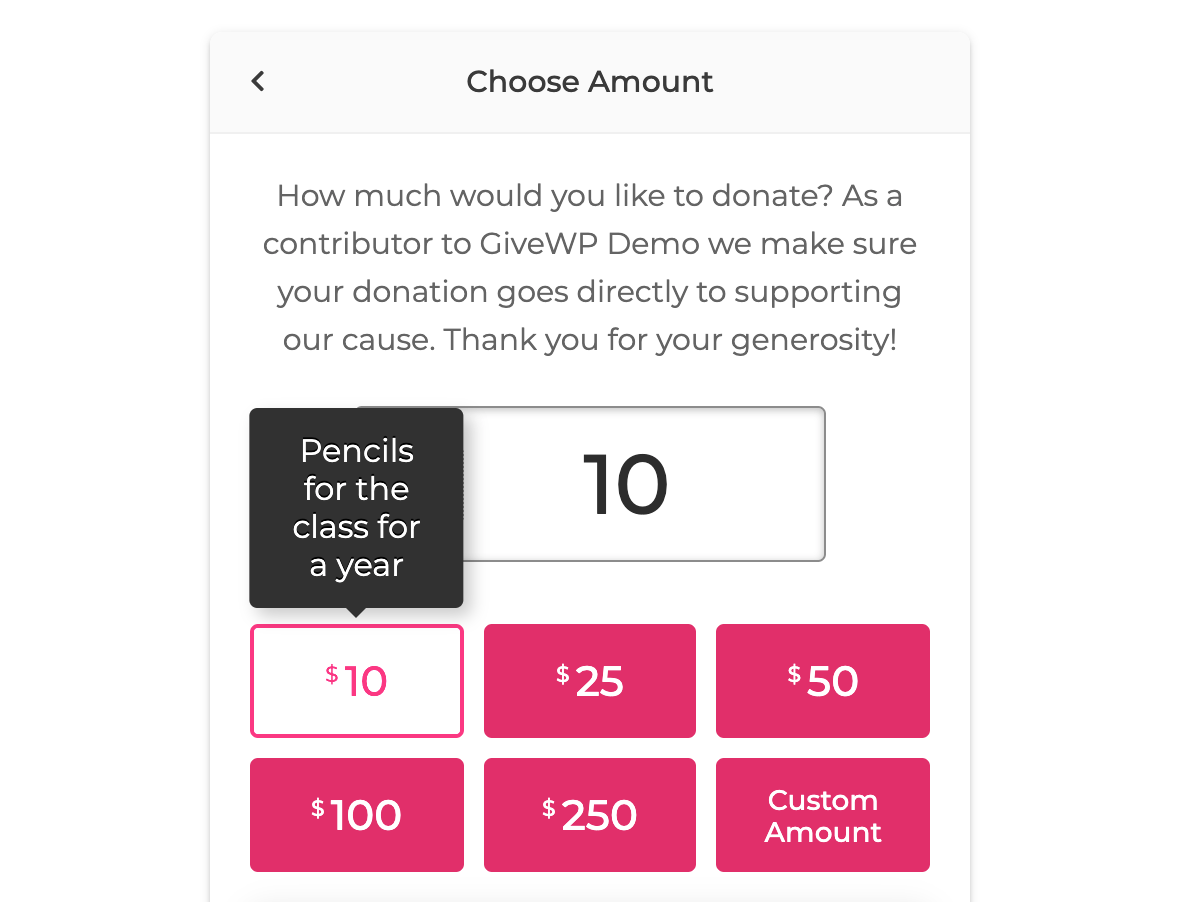
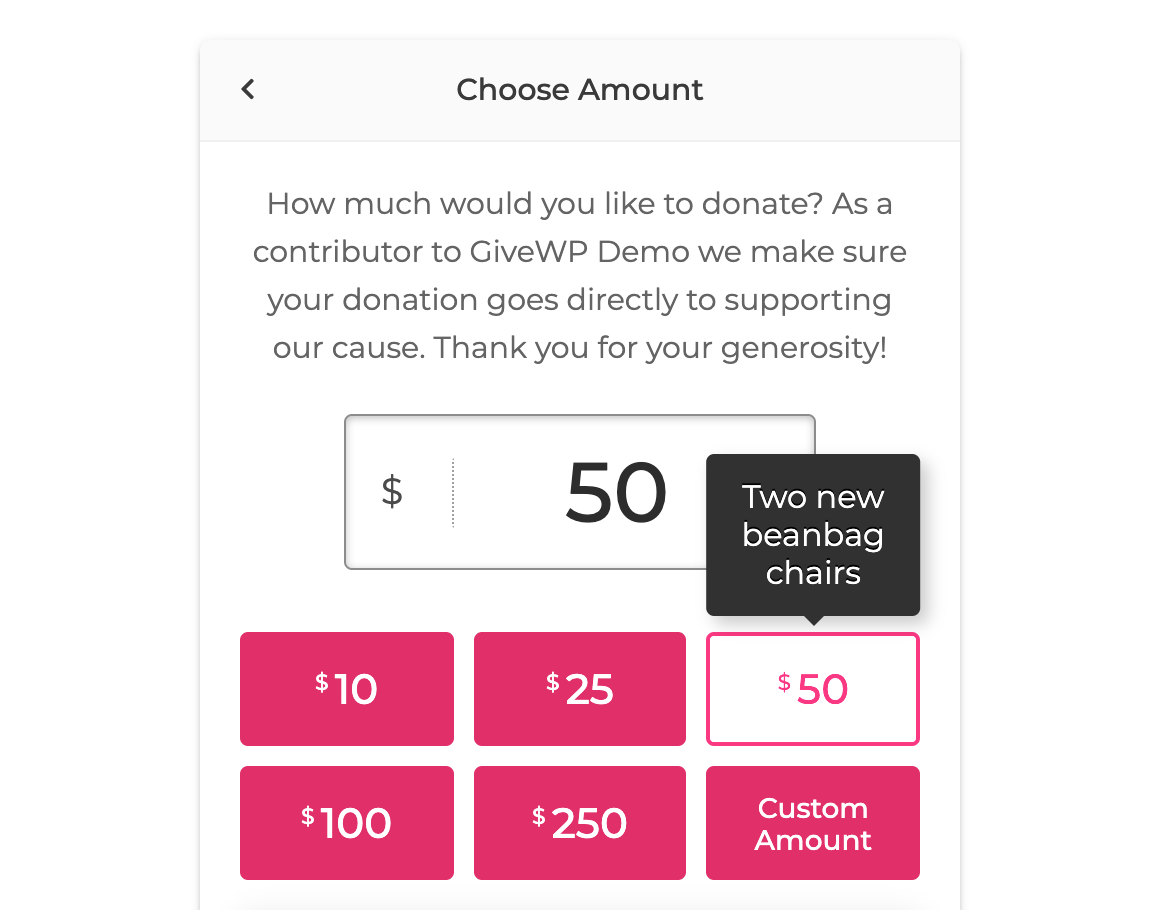
Another happy byproduct of using impact units to inspire donations is that when a donor sees what the needs are, they are more likely to select a higher donation amount to meet a greater need. Would you rather buy $10 worth of pencils for a class, or give kids a place to sit all year in those beanbag chairs? If your budget allows for it, you’ll be inspired to give something more.
Use Real Examples
Whatever you do, don’t try to game higher value donations by making lower value items sound less than inspiring. If all someone has to donate is $10, then make sure they know that $10 will buy something useful (like the pencils in the previous example).
If you’re not sure how to figure out what amounts to recommend, we’ve got you covered. Choosing donation amounts isn’t a mystery.
How to Use Impact Units
Like the example above, you can put the units right on the donation amounts in your form. But don’t stop there. Make sure to use some of those examples in your newsletter, a blog post, a call to action on the donation page, and your social media. Remember, the goal is to inspire giving through impact units, so use those strategically throughout your campaign.
And as always, stay true to your mission and branding, and remember that every dollar is a sacrifice from a donor, so be sure to thank them all!
Show Us Your Impact Units
Are you using impact units on your donation form? Share examples with us – we’d love to see them!
Amplify your fundraising with a GiveWP Plan
About the Author
Michelle Frechette
Once called “The busiest woman in WordPress” by Matt Mullenweg at WCUS 2022, Michelle Frechette is the Executive Director of PostStatus.com and the Program Director for WP Includes (wpincludes.me). In addition to her work at Post Status, Michelle is the Podcast Barista at WPCoffeeTalk, cofounder of Underrepresented in Tech, creator of WPSpeakers, creator of WPCareerPages, co-founder of SponsorMeWP.com, co-founder of SpeedNetworkOnline.com, author, and a frequent organizer and speaker at WordPress events. You can learn more about Michelle at meetmichelle.online.